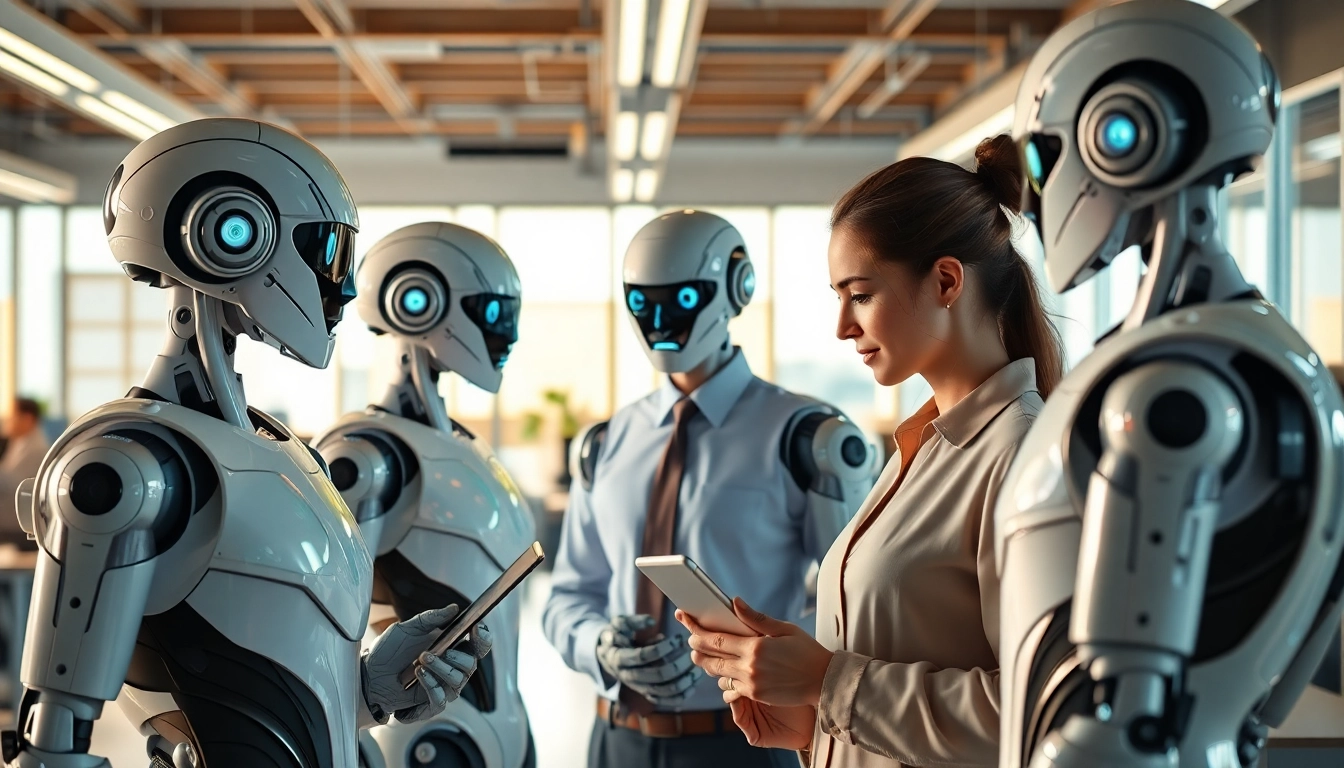
What are Ai Agents?
In the rapidly evolving landscape of technology, Ai agents have emerged as transformative tools capable of performing tasks and making decisions autonomously. These entities, known as intelligent agents, perceive their environment, take actions to achieve specified goals, and continuously improve their performance through machine learning and knowledge acquisition.
Definition of Ai Agents
An Ai agent can be defined as a software system that autonomously performs specific tasks by utilizing available tools and workflows. Unlike traditional programs, Ai agents employ artificial intelligence to adapt to dynamic conditions and respond to various stimuli, thereby enhancing their operational efficiency. For example, virtual personal assistants utilize Ai agents to understand and fulfill user requests through natural interactions.
Types of Ai Agents
There are several types of Ai agents, differentiated primarily by their functionality and application domains:
- Reactive Agents: These agents respond to stimuli without maintaining internal states. They operate on a simple set of rules, functioning effectively in static environments.
- Deliberative Agents: These agents maintain an internal state and use that memory to make informed decisions. They can plan and forecast outcomes based on their environment.
- Hybrid Agents: Combining features of both reactive and deliberative agents, hybrid Ai agents can adjust their behavior based on past experiences while still reacting to immediate inputs.
- Learning Agents: These Ai agents utilize machine learning to improve their behaviors over time. They analyze data and adjust their actions to optimize performance.
Common Applications of Ai Agents
Ai agents have found applications across diverse domains, simplifying and automating complex tasks:
- Customer Support: Virtual assistants and chatbots engage customers, answering queries and resolving issues efficiently.
- Healthcare: Ai agents assist in diagnostics by analyzing patient data and predicting treatment outcomes.
- Finance: Financial advisory Ai agents provide personalized investment advice based on market trends.
- Manufacturing: Ai agents optimize production schedules and manage supply chains by analyzing real-time data.
Key Features of Ai Agents
Autonomy and Decision Making
One of the defining features of Ai agents is their autonomy. They can operate independently without human intervention, making swift decisions based on pre-set criteria and real-time data. This capability is essential in environments where timely responses are critical, such as in financial trading or emergency services.
Learning and Adaptation
Learning is central to the functionality of Ai agents. They leverage machine learning algorithms to adjust their actions based on past experiences. By analyzing user interactions and feedback, they evolve to meet changing needs and circumstances, thus enhancing their effectiveness over time.
Interaction with Users
Effective communication is vital for Ai agents to function optimally. They are designed to understand and process various forms of user input, including natural language. This enables them to engage in conversations, answer questions, and provide tailored responses, enhancing user satisfaction and interaction quality.
Benefits of Implementing Ai Agents
Increased Efficiency
Implementing Ai agents streamlines workflows and boosts productivity by automating repetitive tasks. This allows human employees to focus on more strategic and creative activities. For example, in customer service, chatbots can handle FAQs, freeing human agents to tackle more complex issues.
Cost Reduction
Organizations can significantly reduce operational costs by incorporating Ai agents. The automation of tasks decreases the demand for human labor, leading to lower payroll expenses. Additionally, Ai agents minimize errors, resulting in cost savings associated with correcting mistakes and lost opportunities.
Enhanced User Experience
By providing immediate responses and personalized interactions, Ai agents greatly improve user experiences. They can analyze user preferences and behavior to customize interactions, ensuring that users receive relevant and timely assistance, which fosters loyalty and satisfaction.
Challenges in Utilizing Ai Agents
Ethical Concerns
The deployment of Ai agents raises significant ethical issues, including privacy concerns and decision-making biases. Organizations must ensure that they adhere to ethical guidelines in their design and operation, maintaining transparency about data usage and decision-making processes.
Technical Limitations
Despite advancements, Ai agents face technical limitations that can hinder their performance. These may include their inability to understand complex emotional nuances in communication or their dependency on high-quality data for effective learning. Organizations need to address these limitations to fully leverage Ai agents' capabilities.
Integration with Existing Systems
Integrating Ai agents into existing technological ecosystems can be challenging. Organizations often face compatibility issues with legacy systems and must invest in updates or entirely new infrastructure. Proper planning and a phased approach can help mitigate these integration hurdles.
The Future of Ai Agents
Trends in Development
The development of Ai agents will likely be influenced by advancements in natural language processing and machine learning. As these technologies improve, Ai agents will become more intuitive and capable of understanding context, leading to more human-like interactions and decision-making processes.
Predicted Industry Changes
Industries will continue to evolve alongside the proliferation of Ai agents. As they become more integrated into business operations, organizations will adopt more scalable and adaptive models. This shift may lead to new job roles focused on overseeing Ai agent functions rather than performing tasks traditionally carried out by humans.
Preparing for Evolving Technology
To effectively navigate the future landscape shaped by Ai agents, organizations should invest in training and education. Preparing personnel to work alongside Ai technology and equipping them with the necessary skills will ensure that businesses can adapt and thrive in an increasingly automated world.
Frequently Asked Questions
1. What exactly does an Ai agent do?
Ai agents autonomously perform tasks using artificial intelligence, learning from interactions, and adapting to user needs while engaging in decision-making processes.
2. How do Ai agents learn and adapt?
Ai agents utilize machine learning algorithms to analyze data and user interactions over time to refine their actions and improve performance in achieving specific goals.
3. What industries benefit most from Ai agents?
Industries such as healthcare, finance, manufacturing, and customer support greatly benefit from Ai agents due to their ability to automate repetitive tasks and enhance decision-making.
4. What challenges do organizations face when implementing Ai agents?
Organizations often face ethical concerns, integration issues with legacy systems, and the technical limitations of Ai agents that can hinder their effectiveness.
5. How will Ai agents shape the workforce in the future?
As Ai agents become more prevalent, the workforce will shift towards roles that involve collaborating with these tools, leading to increased demand for specialized skills in technology and management.